



Spring has arrived at the museum. The Tokyo National Museum will once again be holding its annual spring event, "Cherry Blossom Viewing at the Museum."
In the main building, you can see masterpieces of Japanese art with a cherry blossom motif in each exhibition room. In addition, about 10 varieties of cherry blossoms bloom one after another in the garden. In addition to viewing the artworks, you can also enjoy a stroll through the garden and various events.
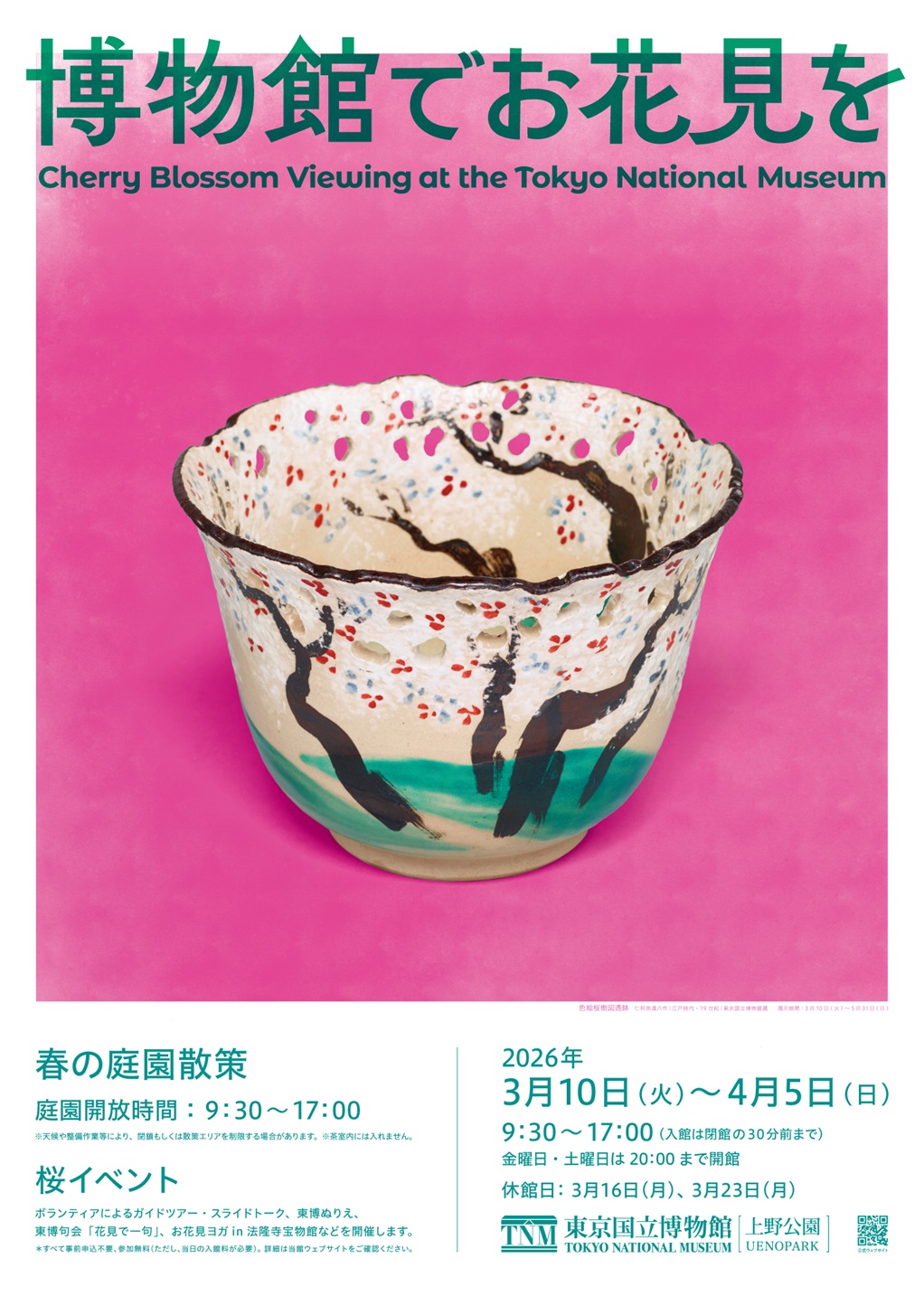
Main visual
■ Cherry blossom viewing in the main building
In the exhibition rooms of the main building, which mainly exhibits Japanese art, you can see a variety of works, including a painting of a famous cherry blossom spot, "Arashiyama Spring Scene," as well as ceramics and lacquerware with a cherry blossom motif, such as "Colored Cherry Blossom Tree Design Open Bowl" and "Sakura Saigyo Maki-e Inkstone Box."
The captions of the relevant works will have a cherry blossom mark, so please look for it and enjoy the cherry blossoms in the exhibition room.
*The following exhibits on the second floor of the Main Building will be closed until Tuesday, April 7th: "Folding Screens and Sliding Door Paintings," "Furnishings for Everyday Life," "The Development of Calligraphy and Painting," "Noh and Kabuki," and "Ukiyo-e and Costumes."
[Major exhibits] *All works are from the Tokyo National Museum
1. Spring Scene of Arashiyama (Arashiyama Shunkei), by Shiokawa Bunrin, 1873 (Meiji 6), donated by Shiokawa Bunrin
March 10th (Tue) – April 19th (Sun) Exhibition in the "Modern Art" section on the first floor of the Main Building
Bunrin was born in Kyoto and was active from the end of the Edo period to the early Meiji period, making him one of the painters who laid the foundations for the modern Kyoto art world. Known also as a master of landscape painting, this work depicts a scene from Arashiyama, a famous cherry blossom viewing spot. The depiction of the misty, hazy atmosphere that envelops the entire painting makes the delicate cherry blossoms in Arashiyama even more beautiful. Bunrin himself donated this work to the museum.
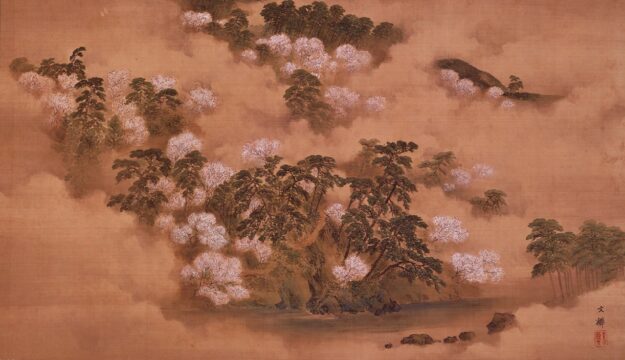
1. Arashiyama Spring View
2. Openwork Bowl with Cherry Blossom Design (Iroe Oujuzu Suka Shibachi), by Ninnami Dohachi, Edo Period, 19th Century
March 10th (Tue) – May 31st (Sun) Exhibition in the Ceramics section on the 1st floor of the Main Building
Cherry blossoms in full bloom are depicted on both the inside and outside of the vessel using pointillism with mainly white, red, and blue paint. The multiple openwork patterns near the rim are also skillfully applied, and when you peer into the vessel, you can almost feel the wind rustling the flowers, making this an exciting piece.
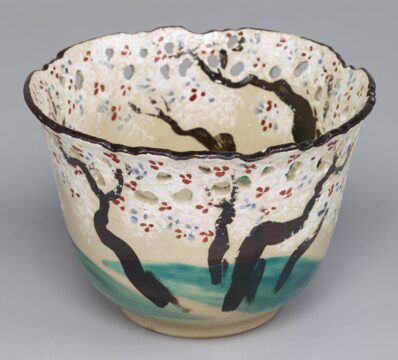
2. Openwork bowl with a design of cherry blossoms
3. Sword Guard with Cherry Blossoms and Mountain Magpies, by Tsukada Hidekyo, 1870
March 3rd (Tue) – May 24th (Sun) On display at "Swords" on the 1st floor of the Main Building
As if celebrating the tranquil spring, a mountain magpie dances within the tsuba, and cherry blossoms bloom. The relaxed atmosphere is created by the way the spreading tail and the shape of the cherry blossom branches harmonize with the white space. This tsuba was made shortly after the end of the samurai era, but the engraving techniques and refined sensibility cultivated in sword fittings have had a major influence on modern metalwork.
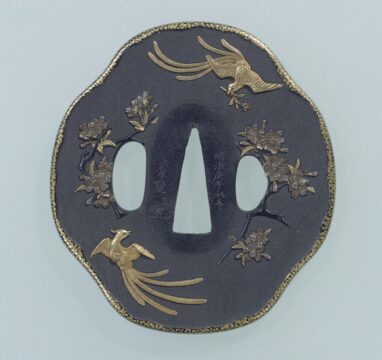
3. Cherry blossom and magpie design tsuba
4. Sakura Saigyo Makie Suzuribako (Sakura Saigyo Makie Suzuribako), Edo period, 18th century
March 17th (Tue) – May 24th (Sun) Exhibition at "Lacquerware" on the 1st floor of the Main Building
The image of a wandering old monk gazing at cherry blossoms is a standard representation of the early modern "Hanami Saigyo" (cherry blossom viewing) scene. The inside of the lid shows a completely different view, overlooking Mount Hiei from the eastern shore of Lake Biwa. In 1189, Saigyo composed his final waka poem with Jien while gazing at Lake Biwa from Mount Hiei, and passed away the following year during the cherry blossom season. The design and composition of this piece is thought to have been intended to evoke in the user the life of Saigyo.
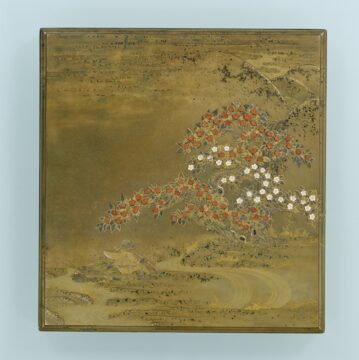
4. Sakura Saigyo Maki-e Inkstone Box
5. Gourd-shaped sake container, made by Funada Ikkoto, Edo period, 1843 (Tempo 14)
March 10th (Tue) – May 31st (Sun) Exhibition at "Metalwork" on the 1st floor of the Main Building
This gourd-shaped sake container is made by joining dark shibuichi (a silver and copper alloy) and red suaka (plain copper) diagonally, and features scattered golden cherry blossoms at the bottom and a silver moon shrouded in clouds at the top. It is the work of Funada Ikkin, who studied under the renowned swordsmith Goto Ichijo.
Cherry blossom viewing has always been accompanied by sake and bento boxes, and this stylish sake container would look great at a cherry blossom viewing party.
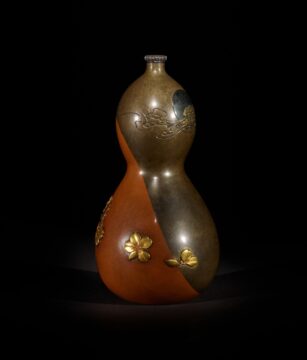
5. Gourd-shaped sake container
■ Cherry Blossom Events *No prior registration required, participation is free (however, admission fee is required on the day)
◆ Guided tours and slide talks by volunteers
During the "Cherry Blossom Viewing at the Museum" event, volunteer guided tours and slide talks will introduce the trees and cherry blossoms on the premises, as well as artwork related to cherry blossom viewing.
Please check our website for dates, times, and details of volunteer guided tours and slide talks.
*The contents may change depending on the weather, etc.
◆ "Tokyo National Museum Coloring Book"
In conjunction with "Cherry Blossom Viewing at the Museum," you can enjoy coloring the "Colored Cherry Blossom Plate" from our museum collection.
Please also take a look at the colors and expressions used in the works in the exhibition room.
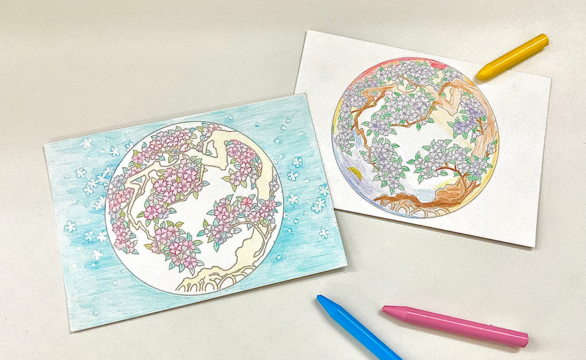
Coloring book
Dates: March 10th (Tue) – April 19th (Sun)
Hours: 9:30am – 5:00pm, open until 8:00pm during night hours
Venue: Main Building Special Room 4
◆Cherry Blossom Viewing Yoga in the Horyuji Treasure Museum
We will be holding a "Cherry Blossom Viewing Yoga" event that anyone can feel free to join.
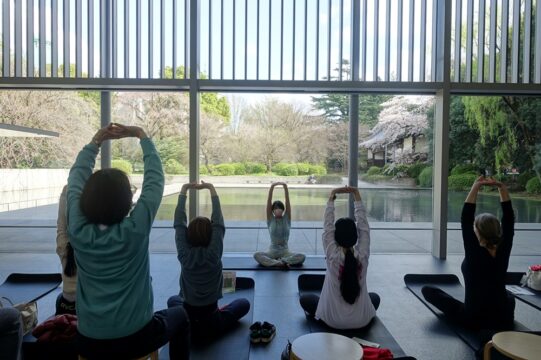
Cherry Blossom Viewing Yoga 2023
Date and time: Thursday, March 26th
(1) 13:00-13:30
(2) 14:00-14:30
(3) 15:00-15:30 (reception opens 15 minutes before each session)
Location: Entrance to the Horyuji Treasure Gallery
*Only the first 20 people will be accepted, and participation is free (however, admission fee for the day is required)
*Please check our website for details.
Tohaku Haiku Society "A Haiku at Cherry Blossom Viewing"
During the "Cherry Blossom Viewing at the Museum" event, we are accepting haiku submissions with a cherry blossom theme. Why not try writing a haiku about a cherry blossom garden or a work of art with a cherry blossom motif?
For details on how to apply, please visit our website.
■About strolling around the garden
In the garden, about 10 varieties of cherry blossoms bloom one after another, including Somei Yoshino, Oshima cherry, and weeping Edohigan cherry. You can also sit on the stone bench in front of the pond and relax and enjoy the view. This is the best season for strolling, so please enjoy the cherry blossoms in the garden along with the cherry blossom artworks in the exhibition room.
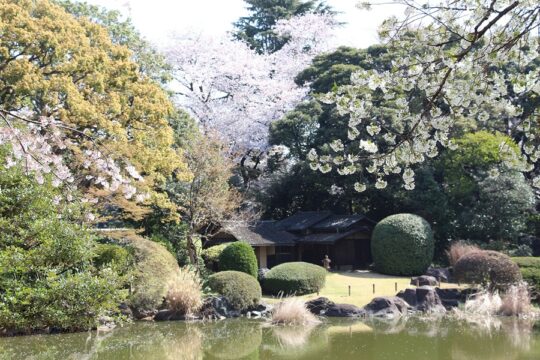
Garden scenery
Opening hours: 9:30am – 5:00pm
*Due to weather or maintenance work, the trail may be closed or the walking area may be restricted.
*You cannot enter the tea house in the garden.
■Other special features and projects to be held in March 2026
*For further details, please visit our website.
Special feature: "Calligraphy and Painting in the Late Ming and Early Qing Dynasties: Dreams in Chaotic Times"
January 1, 2026 (Thursday/Holiday) – March 22, 2026 (Sunday) Toyokan Room 8
Special Feature: 60th Anniversary of the Normalization of Diplomatic Relations between Japan and South Korea
"A Treasure Box of Korean Art: Welcoming the Collection of the National Museum of Korea"
February 10, 2026 (Tuesday) – April 5, 2026 (Sunday) Main Building Special Room 1, Special Room 2
Special Feature: "The Rich Lifestyle of Formosa (Beautiful Island)" – Materials on the Indigenous Peoples of Taiwan –
March 10th (Tue) – May 31st (Sun), 2026 Heiseikan Special Exhibition Room
["Cherry Blossom Viewing at the Museum" Visitor Information]
Date: March 10th (Tuesday) – April 5th (Sunday), 2026
Opening hours: 9:30am – 5pm
* Open until 8:00 PM on Fridays and Saturdays. * Last admission 30 minutes before closing.
Closed: Mondays
*However, the museum will be open on Monday, March 30th.
*Rooms 7-10 in the Main Building and the Heiseikan Archaeological Exhibition Room will be closed until Tuesday, April 7th.
*Room 8 of the Toyokan will be closed from March 24th (Tue) to April 7th (Tue).
Admission fee: 1,000 yen for adults, 500 yen for university students
*Free admission for high school students and younger, those under 18, and those 70 and older.
Please show proof of age when entering the museum.
*Free admission for disabled people and one caregiver.
Please present your disability certificate when entering the building.
*Additional fees apply for paid events.
Access: 10 minutes walk from JR Ueno Station Park Exit or Uguisudani Station South Exit
15 minutes on foot from Tokyo Metro Ueno Station or Nezu Station, or Keisei Electric Railway Keisei Ueno Station
Inquiries: 050-5541-8600 (Hello Dial)
Website: https://www.tnm.jp/
*The dates, opening days, opening hours, exhibited works, exhibition period, and event content may be subject to change due to future circumstances. Please check the museum's website for further details.
[Tokyo National Museum] Press release
